


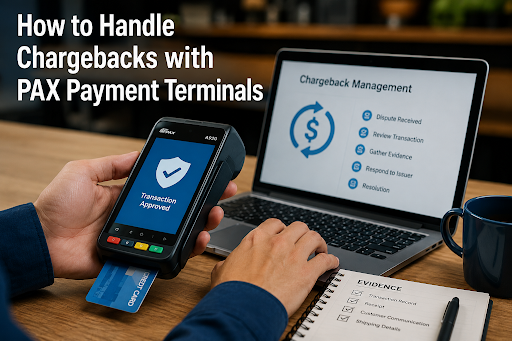
How to Handle Chargebacks with PAX Payment Terminals
Chargebacks are one of the main challenges that merchants face frequently when accepting card payments, whether running a retail store, restaurant, e-commerce business, or service-based company. A single conflict can turn revenue into loss.
A PAX POS system helps merchants to process payment securely, but handling problems effectively demands more than accepting card transactions. Understanding why chargebacks occur, how to respond to queries, and how to reduce future conflicts can all protect your business and improve profitability.
Get Started With Us
Fill in your details and we'll get back to you shortly.
What Is a Chargeback?
A chargeback occurs when a customer asks their bank to reverse a transaction. Instead of requesting a refund from the merchant, the customer challenges the charge through their bank.
Common reasons for chargebacks include:
- Unauthorized transactions
- Fraudulent card usage
- Duplicate charges
- Billing errors
- Products or services not received
- Customer dissatisfaction
- Subscription misunderstandings
Once the dispute is registered, the customer reviews the transaction and may temporarily take the money from the merchant's account while the case is being investigated.
Why Chargebacks Matter for Merchants
A lot of business owners underestimate the true cost of chargebacks.
A merchant typically loses:
- The original transaction amount
- Chargeback processing fees
- Operational time spent responding
- Potential inventory losses
- Increased risk of higher processing costs
A high number of chargebacks can damage a merchant's reputation with payment processors and acquiring banks, making it difficult to maintain a good merchant account.
That's why using proactive chargeback management strategies on a PAX terminal is important for protecting your business and maintaining long-term stability.
Understanding the PAX Chargeback Process
| Chargeback Stage | What Happens |
|---|---|
| Customer Dispute | Cardholder contacts their bank |
| Investigation Begins | The issuing bank reviews the claim |
| Funds Withheld | The transaction amount may be temporarily deducted |
| Evidence Request | The merchant is asked to provide supporting documents |
| Review Process | Banks evaluate both sides |
| Final Decision | Chargeback is either upheld or reversed |
When merchants understand the PAX chargeback process, they react quickly and give stronger proof while the investigation is underway.
How to Manage Chargebacks PAX POS Transactions Effectively
A successful dispute management starts with accurate transaction records. While learning how to manage chargebacks, the PAX POS transaction focused on the following.
- Transaction receipts
- Authorization records
- Customer signatures
- Delivery confirmations
- Invoice documentation
- Refund records
- Communication history
The stronger your documentation, the higher your chances of successfully fighting invalid chargebacks.
Respond Quickly to Disputes
Missing response deadlines is one of the most common reasons merchants lose chargeback cases. A bank generally gives a limited time to submit evidence. A late response can lead to an automatic loss, even when your documentation is strong.
When handling a PAX payment dispute request:
- Review the dispute reason carefully.
- Gather all transaction-related records.
- Verify authorization details.
- Prepare supporting evidence.
- Submit documentation before the deadline.
A fast action can show your professionalism and also increase the chance of winning the dispute.
Using PAX POS Devices to Strengthen Your Defense
Modern PAX POS devices have a feature that supports dispute prevention and resolution. These features may include:
Secure Transaction Records
The digital payment logs ensure accurate tracking of customer payments and authorization information.
Receipt Management
Digital receipts make it easier to confirm transactions and eliminate billing misunderstandings.
EMV Chip Transactions
Transactions via chip-based cards offer greater security than those involving magnetic stripe cards, thus limiting fraud claims.
Contactless Payments Authentication
Contactless payments result in authentication logs that might assist in dispute investigation.
These features are essential for handling PAX POS dispute resolution issues.
How to Respond to Chargebacks PAX Merchants Receive
A lot of merchants get confused when they receive a dispute notice, but if they respond in an organized process, they can usually increase the chances of a successful outcome.
Step 1: Review the Dispute Reason
Identify the type of claim, such as:
- Fraud
- Service issues
- Product delivery concerns
- Duplicate billing
- Processing errors
Step 2: Gather Supporting Evidence
Gather all available documents related to the transaction. Example:
- Signed receipts
- Order confirmations
- Shipping records
- Customer communications
- Refund policies
Step 3: Build a Clear Case
Present your evidence in an organized way, and avoid submitting unnecessary files that confuse the reviewer.
Step 4: Submit Before the Deadline
Following proper procedures is essential when learning how to respond to chargebacks PAX merchants encounter.
A well-organized response increases credibility and improves the review process.
Creating a Strong PAX Merchant Chargeback Guide for Your Team
A practical guide should include:
- Staff training procedures
- Receipt retention policies
- Refund handling guidelines
- Documentation requirements
- Escalation workflows
- Response deadlines
Best Practices for Long-Term Chargeback Reduction
- Keep transaction records organized
- Train employees regularly
- Monitor suspicious activity
- Review dispute trends
- Improve customer support
- Use secure payment technology
- Maintain transparent business practices
Final Thought
However, chargebacks should not be allowed to affect business performance negatively since there are ways of dealing with them effectively. The first step towards solving the issue of chargebacks is using an advanced PAX POS system.
This system will help in gaining clarity regarding the transactions as well as ensuring that payment information is secure. It is necessary for a business to understand the chargeback cycle and use it accordingly.