


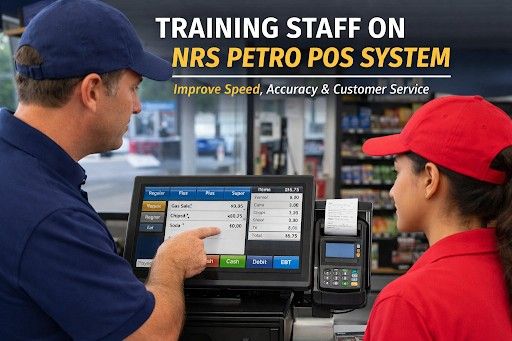
Train Staff on NRS Petro POS System for Gas Stations
A single mistake in NRS Petro POS training can slow your gas station during peak hours.
Gas stations manage fuel sales, store items, and various payment methods all at once. This will require speed, accuracy, and consistency. Many owners invest in a reliable POS system but overlook proper staff training. This gap causes slow service, transaction errors, and a poor customer experience.
A trained team can handle pressure, complete transactions quickly, and avoid unnecessary as well as costly mistakes. Without training, even the best system fails to deliver results. Staff must understand not only how the system works but also how to use it under real conditions.
This guide explains a clear and practical approach to train your staff. You will learn:
- Step-by-Step Guide for Staff Training
- Real Scenarios
- Proven Strategies
That helps your team perform better and keep operations smooth.
Get Started With Us
Fill in your details and we'll get back to you shortly.
Why Staff Training Matters in Gas Stations?
Gas stations deal with constant customer flow and quick decision-making. Staff must handle fuel pumps, store items, and payments without delay.
Proper training helps staff:
- Process transactions faster
- Reduce billing mistakes
- Manage multiple tasks
- Handle customers with confidence
Untrained staff create delays and errors. Training builds consistency and improves overall performance.
What is the NRS Petro POS System?
The overview of NRS Petro shows that it is built for gas stations and convenience stores.
It supports:
- Fuel sales management
- Retail checkout
- Payment processing
- Sales tracking and reports
This system combines all operations into one platform, which makes proper training essential.
Who Makes the NRS Petro POS System?
Many business owners ask this question.
And the answer is:
National Retail Solutions develops this system to support gas stations and small businesses. The company focuses on providing simple, reliable, and business-focused POS solutions that support daily operations.
NRS designs this system with real retail and fuel business needs in mind. It integrates payment processing, inventory management, and reporting into one platform, which helps owners manage operations more systematically.
Step-by-Step Process to Train Staff Quickly
A structured method gives better results than random instructions. So, the major steps to start training are given below:
Step 1: Start with System Basics
Introduce the system interface and main functions. Show staff how to log in, navigate menus, and access key features.
Explain:
- Dashboard layout
- Transaction buttons
- Basic controls
Keep it simple at this stage to avoid overwhelming new employees.
Step 2: Display Actual Transactions
Explain how to handle real sales, including fuel and store items. Guide staff through each step so they complete transactions correctly and without delays.
Cover:
- Cash payments
- Card payments
- Mixed transactions
Let staff observe first before asking them to perform tasks.
Step 3: Hands-On Practice
Let staff use the system on their own. Also, hands-on experience builds confidence faster than theory. In this way, it helps them learn quickly and handle different types of situations with ease.
Create test scenarios:
- Fuel purchase
- Store checkout
- Refund process
Supervise closely and correct mistakes immediately.
Step 4: Train for Peak Hour Situations
Gas stations become busy during peak hours. Staff must remain cool and calm and also work more quickly under pressure. Proper training helps them manage high traffic smoothly.
Train them to:
- Handle long queues
- Process transactions quickly
- Avoid delays
Simulate real rush conditions during training sessions.
Step 5: Teach Error Handling
Mistakes will happen. Staff must know how to fix them without panic.
Train them on:
- Delete transactions
- Fix incorrect entries
- Resolve payment errors
It lowers system downtime and boosts service efficiency.
Step 6: Focus on Customer Interaction
A POS system is not just about transactions. It affects customer experience.
Train staff to:
- Communicate clearly
- Confirm payments
- Provide receipts properly
Good interaction improves customer trust.
Key Features Staff Must Learn
The NRS Petro POS features and benefits include essential tools that staff must understand clearly for smooth operations.
Fuel Transaction Handling
Teach the staff how to process fuel payments quickly and accurately through the system. This helps reduce delay at pumps and ensures smooth customer flow during busy hours.
Inventory Control
The system tracks store items and stock levels in real time. Staff use this to update inventory and avoid issues like stock shortages or incorrect pricing.
Processing of Payment
The POS supports multiple payment methods such as card, cash, and digital payments. Staff must handle each method properly to avoid transaction errors and delays.
Sales Reporting
The system provides detailed reports that show daily sales and performance. Many staff and managers can use this data to monitor business activity and make better decisions.
Focus on features that staff use daily instead of advanced options.
Real-World Scenario: Training Impact
A gas station owner faced long queues and frequent billing mistakes. Staff lacked confidence and struggled with the system.
After structured training:
- Transaction time reduced by up to 30%
- Errors decreased by nearly 40%
- Customer satisfaction improved noticeably
Industry data also shows that businesses with trained POS staff can improve checkout speed by 20–35%, which directly impacts daily sales and customer retention.
The business served more customers and increased daily revenue. This example shows the direct value of proper training.
Training Methods That Deliver Results
Effective training requires the right approach.
Practical Learning
Use real scenarios instead of theory. Staff learn faster with direct experience.
Short Sessions
Make sure to keep the training session focused and clear. Long sessions reduce attention.
Repetition
Repeat key tasks until staff perform them without hesitation.
Feedback
Provide immediate feedback to correct errors and improve performance.
Common Mistakes to Avoid
Many businesses fail due to poor training methods.
Avoid these:
- Too much information at once
- Lack of practice
- No peak hour training
- No performance checks
- Skipping error-handling training
- Not updating staff on system changes
- Ignoring real transaction practice
- Lack of supervision during early training
Simple and structured training works best.
Comparison: Trained vs Untrained Staff Performance
A clear comparison shows how proper training directly impacts daily operations and overall business performance.
| Factor | Trained Staff | Untrained Staff |
|---|---|---|
| Speed | Fast | Slow |
| Accuracy | High | Low |
| Customer Experience | Positive | Negative |
| Confidence | Strong | Weak |
| Revenue Impact | Higher | Lower |
This makes it clear that trained staff not only improve efficiency but also contribute to better customer satisfaction and increased revenue.
How to Measure Training Success?
Training must produce clear results.
Track the following indicators:
- Transaction Time: Measure how quickly staff complete transactions compared to pre-training performance.
- Error Rate: Monitor the number of mistakes or corrections during sales to see if accuracy improves.
- Customer Feedback: Receive feedback from customers to assess satisfaction and service quality.
- Staff Confidence: Observe how confidently employees operate the system without guidance.
These indicators show whether training works.
Is NRS Petro POS Reliable and Trustworthy?
The reliability of NRS Petro POS depends on its real-world performance.
The system offers:
Stable Operation
The POS maintains smooth and uninterrupted performance even during peak hours, ensuring business continuity.
Secure Payments
It safeguards all transactions with advanced security measures, protecting both the business and customers.
Consistent Updates
Regular software updates keep the system current, enhancing functionality and security over time.
User Confidence
Most operators find it dependable when staff are trained to use it correctly, which reduces errors and improves service quality.
With these features, businesses can trust the system to support daily operations efficiently while maintaining security and consistency.
NRS Petro POS Pros and Cons
The NRS Petro advantage and disadvantage help you understand its value.
Pros
- Simple interface
- Designed for gas stations
- Supports multiple payment methods
- Improves efficiency
Cons
- Requires proper training
- Depends on internet stability
- Initial setup may take time
- Additional hardware may be needed
- Limited offline functionality
Is There Any Honest Review of NRS Petro in 2026?
The NRS Petro POS honest user review 2026 reflects a consistent pattern across gas station owners and store managers. More users report that the system feels easy to learn, especially for new staff, which reduces training time and improves daily operations.
Many users highlight faster checkout speed and smoother fuel transaction handling as major advantages. They also appreciate how the system combines fuel and retail sales in one place, which simplifies management and reporting.
However, some users mention that performance depends on stable internet connectivity, and initial setup requires proper guidance to avoid confusion.
Overall, real user feedback shows that businesses that invest in staff training get the best results. The system proves reliable, efficient, and practical for gas stations that need speed and accuracy in daily operations.
Advanced Training Tips
Training should continue after some basics.
Conduct regular sessions: Schedule frequent training sessions to reinforce knowledge and address new challenges.
Train staff based on roles: Customize training according to each employee's responsibilities to maximize efficiency and effectiveness.
Monitor performance: Track staff performance during transactions to identify gaps and provide targeted guidance.
Continuous improvement keeps staff efficient.
How To Maintain Consistency?
Consistency keeps a gas station running efficiently during peak hours. It ensures smooth operations, reduces errors, and improves customer satisfaction. Businesses can achieve this by following structured processes and monitoring performance closely.
Create standard procedures: Establish clear step-by-step guidelines for every task, from fuel sales to handling payments, so all staff follow the same workflow.
Review staff performance: Track employees regularly to confirm they follow procedures and identify areas for improvement. Use metrics like checkout speed, error rate, and customer feedback.
Conduct periodic training: Provide regular refresher sessions and role-specific guidance to reinforce best practices. This keeps staff confident and able to handle busy periods effectively.
Combining standardized procedures, performance review, and regular training helps businesses maintain operational consistency, minimize errors, and deliver reliable service that strengthens customer trust.
Final Thought
Training your staff on NRS Petro POS is not a one-time task. It requires consistency, clear processes, and regular practice to ensure smooth operations at your gas station.
A trained team works faster, reduces errors, and improves customer satisfaction. These small improvements directly impact your daily revenue and long-term growth.
Do not wait for mistakes to happen before you train your staff. Start implementing a structured training system today and ensure every employee knows how to use the POS devices efficiently from day one.