

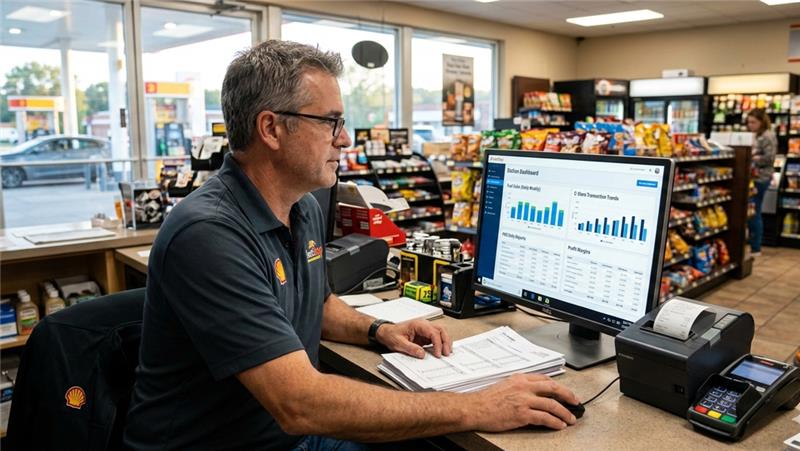
Compare NRS Petro POS vs other gas station POS systems: 2026
Every gas station owner wants faster checkouts, fewer pump issues, and better control over store sales. NRS Petro POS enters that conversation early because many owners want a system built for fuel retail, not a basic retail setup with a few extra tools.
Many owners also compare Clover machines when they review checkout hardware, card acceptance, and front-counter ease of use. The bigger question, however, is not just which device looks easier to use. Gas station owners need to know which system supports fuel sales, staff control, reporting, and daily speed without creating more work.
This guide gives a full comparison in plain language. It helps station owners compare features, costs, strengths, limits, and real business fit before they choose a POS system.
Get Started With Us
Fill in your details and we'll get back to you shortly.
Why Gas Stations Need Different Types of POS
A gas station does not run like a small retail shop. It sells fuel, snacks, drinks, tobacco, auto supplies, and other fast-turn items. It can also handle pump activity, rush-hour traffic, age-restricted sales, and shift-based cash control.
A strong gas station POS should help owners to:
- Handle fuel and store sales in one flow checkout.
- Reduce checkout delays.
- Connect the forecourt with the register.
- Manage inventory across fast-moving c-store items.
- Monitor cashier activity.
- Support growth without forcing a full system change later.
This is why operators try to discover the best POS system for gas station businesses before they commit to a platform.
What NRS Petro POS Tries to Solve
NRS POS aims to support the full fuel-station workflow, and it does not target general retail first and add fuel afterwards. Because it matters to owners, who want a tighter link between pumps, payment flow, and cashier action.
Petro POS is used by gas station owners who need:
- Fuel-focused checkout support on time.
- Stronger alignment between pump sales and in-store sales.
- Easier control over c-store items, inventory, and fuel stations.
- Better visibility into daily station activity.
- A setup that fits independent operators and growth-minded owners.
This is why many owners review the features of NRS Petro POS alongside those of competitor POS systems before making a final choice.
Where Clover Machines Enter the Conversation?
Some gas station owners look at Clover machines because they know the brand, like the hardware style, or want a simple card-payment setup at the corner. Clover can work well in many retail stations and service settings. It offers modern hardware, clean interfaces, and an easier learning curve for many teams.
But fuel retail creates extra demand.
A gas station owner should ask these questions before giving any final thought:
- Can this system support pump workflows well?
- Does it fit fuel and store sales in one process?
- Will it need extra tools or workarounds?
- Can it handle rush-hour transaction pressure?
That is the reason why buyers often try to determine whether NRS Petro POS is better than other POS systems for gas stations, rather than stopping at hardware preference alone.
What Owners Should Compare Before They Choose?
A good gas station POS decision starts with daily operations, not product marketing.
Key Things to Compare
- Pump integration
- Store checkout speed
- Fuel and store reporting
- Inventory control
- Age-verification support
- Hardware fit
- Set up cost
- Support quality
- Expansion potential
These factors help operators evaluate which POS system is most efficient for fuel station management before they choose one platform over another.
Quick Comparison Table
| Factor | NRS Petro POS | Clover Machines | Other Gas Station POS Systems |
|---|---|---|---|
| Fuel focus | Strong | Limited for fuel-first use | Varies by vendor |
| Pump support | Built for fuel retail needs | Not the main strength | Varies widely |
| C-store fit | Strong | Good for general checkout | Often strong in fuel-focused systems |
| Ease of training | Good for station teams | Often easy at the counter | Depends on setup |
| Reporting | Fuel and store visibility | More retail-oriented | Varies by provider |
| Scalability | Good for many operators | Better for general retail growth | Strong in some enterprise systems |
| Best fit | Fuel stations with c-store needs | Simple checkout-focused setups | Fuel retailers with specific operational needs |
This table provides a quick overview, but owners should still review each area in detail.
Feature Comparison: Fuel, Store, and Daily Control
The best POS for a gas station must perform well in three places at once: the forecourt, the store, and the back office. Buyers need to compare the features of NRS Petro POS with other fuel POS systems instead of looking only at checkout hardware.
Fuel Control and Forecourt Use
Fuel sales sit at the heart of gas station operations. A POS system must support that without friction.
NRS Petro POS fits this area better than many general systems because it aims at fuel retail from the start. That can help owners manage:
- Pump authorization
- Fuel transaction flow
- Forecourt to register coordination
- Mixed fuel and in-store purchases
A standard retail setup may process store sales well, but gas stations need more than that. That's why most operators begin analyzing the reliability and performance of NRS Petro POS compared to competitors before making a purchase.
Small Takeaway
If fuel drives the business, owners should treat pump support as a core need, not a bonus feature.
Convenience Store Sales and Fast Checkout
Fuel does not carry the whole station. C-store sales often drive profit. That means the POS must also handle:
- Snacks
- Beverages
- Tobacco
- Auto supplies
- Impulse-buy items
- Lottery or age-restricted products
NRS Petro POS supports this combined model well because it treats the gas station as one business with two revenue streams.
Clover hardware may still appeal to owners who want a simpler front-counter experience. But if the store relies on a deeper fuel-and-c-store link, that simple setup may not cover the full operation without extra effort.
C-Store and Checkout Comparison Table
| Area | NRS Petro POS | Clover Machines | Traditional Retail POS |
|---|---|---|---|
| Fast item checkout | Strong | Strong | Strong |
| Fuel and store sales in one flow | Strong | Limited | Limited |
| Age-restricted item support | Relevant for station use | May support general retail rules | Varies |
| C-store workflow fit | Strong | Moderate | Moderate |
| Station-specific visibility | Strong | Lower | Lower |
This is where many owners begin to see the real gap between fuel-first systems and retail-first systems.
Pricing: What Owners Need to Think About
Many buyers make one mistake at the start: they compare only the monthly fee.
That does not give the full picture.
Buyers should compare:
- Hardware cost
- Setup charges
- Installation needs
- Monthly software fees
- Support cost
- Payment-processing terms
- Future upgrade costs
That is the right way to check pricing differences between NRS Petro POS and other POS solutions before making a long-term investment.
Pricing Comparison Table
| Cost Area | NRS Petro POS | Clover Machines | Other Fuel POS Options |
|---|---|---|---|
| Upfront hardware cost | Depends on station setup | Often clear by device type | Varies |
| Installation complexity | Can reflect fuel needs | Often simpler for retail checkout | Varies by vendor |
| Software fee | Depends on the package | Depends on device and plan | Varies widely |
| Long-term fit value | Strong for fuel retail | Better for simple checkout use | Strong in fuel-focused systems |
| Add-on risk | Lower when fuel needs are central | Higher if fuel features need extra support | Depends on the platform |
Owners should judge value by fit, not price alone.
Real Scenario: A Growing Operator With Multiple Locations
A multi-site operator faces a different challenge. One location may run smoothly with almost any decent system, but three locations can expose weak reporting, weak compatibility, and weak management controls very quickly.
An owner in this position needs more than working checkout. They need:
- Stronger station-wide visibility
- Easier oversight
- Better consistency across locations
Many operators start to decide whether NRS Petro POS is a good long-term investment for gas stations once growth is part of their future plan.
A system may look appealing for a specific site, but it mainly suggests:
- Future expansion for long-term support
- Strong reporting across many sections
- Cleaner operational control across multiple locations.
Pros and Cons of NRS Petro POS
No platform fits every business in the same way. Many buyers should compare both strengths and limits before they commit.
Advantages
- Fuel-first workflow.
- Strong fit for fuel and c-store sales.
- Giving a useful report for station operations.
- Better operational alignment than many retail-first setups.
- Practical value for independent station owners.
- Clearer support for forecourt and register coordination.
Possible Drawbacks
- Its setup needs could vary by location.
- Some competitors may offer deeper enterprise tools.
- Support and hardware fit still need to be reviewed.
- Some stations may prefer a different cost model.
This helps owners understand the pros and cons of NRS Petro POS compared to competitors without reducing the decision to marketing language.
Cloud-Based vs Traditional Gas Station POS Options
Some owners now compare remote access and modern system control against more traditional on-site structures. That comparison is necessary because of multi-location growth, off-site management, and faster data access can shape long-term value and also give cost-friendly support to many users.
Buyers should compare cloud-based gas station POS systems with NRS Petro POS by asking:
- How easily they can view reports remotely?
- How are updates handled?
- How quickly they can access the daily station data?
- How well does the system support future expansion?
This comparison can help owners make a stronger long-term decision.
Which Owners May Prefer Clover Machines?
Clover can still appeal to a certain type of buyer.
Clover may fit owners who want:
- Modern checkout hardware
- Easier front-counter use
- Simple card acceptance
- Less complex retail workflows
- A cleaner device experience
Clover should not be the only point of comparison if the station needs deeper fuel control, reporting, inventory management, and pump support.
It works better as a checkout-hardware conversation than as a full fuel-retail answer.
Which Owners May Prefer NRS Petro POS?
NRS Petro POS may fit owners who:
- Run a gas station with a c-store
- Want a fuel-first system
- Need stronger forecourt and register alignment
- Want station-focused reporting
- Expect growth, but still want practical daily control
Choose a scalable POS system for growing gas station businesses rather than one that only addresses short-term checkout needs.
How to Make the Final Choice?
A smart owner should not ask only, "Which brand sounds stronger?" but rather, "Which system fits my station, my staff, and my future plans best?"
Ask these questions before you decide:
- Does the system support both fuel and store sales well?
- Will it keep checkout fast during rush hours?
- Can my team learn it without long delays?
- Does it fit my current hardware and pump setup?
- Will it still work if I grow to more locations?
- Does the reporting show what I need each day?
- Will the long-term cost match the value?
Those questions lead to a better choice than feature lists alone.
Conclusion
NRS Petro POS makes a strong case for gas station owners because it targets fuel and convenience-store operations as a single, connected business. Clover machines may still work for simpler front-counter checkout needs, but many fuel retailers need more than clean hardware and basic retail flow. The best choice depends on pump support, store workflow, speed, reporting, and long-term fit.
If you want a POS system that supports daily station demands without extra workarounds, compare fuel-first options carefully before you commit.
Frequently asked questions
No, it can also fit small and mid-sized stations that need fuel-focused support.
Yes, they can help with counter checkout, but they may not match fuel-first needs as well as a specialized station POS.
Pump support, transaction speed, c-store control, and reporting matter most.
Yes, but you should judge them by fuel-station needs, not general store features.
It can be a strong choice for owners who want a POS system built around fuel and c-store operations.