


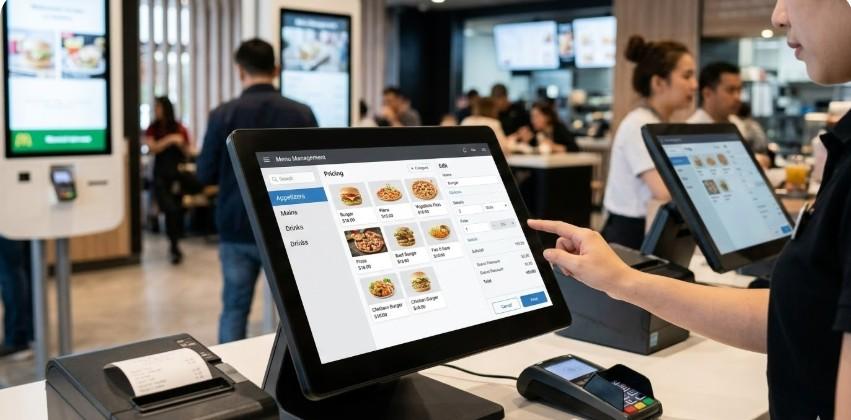
Restaurant POS System Cost: Hardware, Software & Installation Prices 2026
Running a restaurant today requires more than good food and service. Owners must manage orders, inventory, staff, and payments while maintaining speed and accuracy. Many operators want to know the average cost of a restaurant POS system before they invest in technology that affects daily operations.
Modern POS devices for restaurant environments do far more than process payments. They help restaurants manage orders, track sales performance, monitor inventory, and improve operational efficiency. When restaurants adopt reliable POS machine devices, they gain better visibility into their business and reduce manual work across multiple departments.
However, pricing varies widely depending on hardware, software features, and installation requirements. In this guide, we explain how much a POS system for a restaurant costs in 2026, break down the key cost factors, and help you estimate a realistic budget for your restaurant.
Get Started With Us
Fill in your details and we'll get back to you shortly.
Trying to Understand the Average Cost of a Restaurant POS System?
Restaurant owners often seek a clear answer on pricing, but POS costs depend on several factors, including system complexity, the number of terminals, and integration requirements.
In general, most restaurants fall within the following price ranges:
| Restaurant Size | Estimated Setup Cost | Monthly Software Cost |
|---|---|---|
| Small cafe or takeaway | $800 – $3,500 | $60 – $120 |
| Mid-size restaurant | $3,000 – $10,000 | $120 – $300 |
| Multi-location restaurants | $15,000+ | $300+ |
This restaurant POS system price comparison shows how quickly costs scale as restaurants add terminals, kitchen displays, and integrations.
Instead of focusing on a single number, restaurant owners should evaluate the full system cost, including hardware, software subscriptions, payment processing fees, and support services.
What Affects the Cost of a Restaurant POS System?
Several components determine the final price of a POS system.
Hardware Infrastructure
Restaurants require different hardware depending on service style and workflow.
Typical hardware includes:
- POS Terminals
- Kitchen Display Systems
- Receipt Printers
- Cash Drawers
- Barcode Scanners
Larger restaurants need more terminals, which increases the system's cost.
Software Capabilities
Software features can also impact pricing strategies.
Advanced systems often include:
- Inventory management automation
- Sales analytics dashboards
- Loyalty program integration
- Online order synchronization
- Multi-location reporting
These features explain the cost-effectiveness of a restaurant POS system. Restaurants that require advanced analytics or delivery integrations typically pay higher subscription fees.
Business Complexity
Fine-dining restaurants, franchises, and multi-location chains require more advanced infrastructure compared to small cafés or takeaway shops.
Monthly vs Upfront Cost of Restaurant POS Systems
Restaurant owners often decide between buying the system upfront or choosing a subscription model.
Upfront Purchase Model
Restaurants that buy hardware outright usually pay:
- Higher initial equipment costs
- Lower monthly software fees
- Full ownership of hardware
This approach suits restaurants with available capital.
Subscription Model
Many modern systems offer pricing updates and support.
Restaurants pay:
- Lower upfront setup costs
- Monthly software subscriptions
- Continuous updates and cloud storage
Understanding this difference can help owners balance their immediate budget with long-term operational needs.
Many growing restaurants prefer subscription systems because they scale easily as the business expands.
Understanding the Core Cost Components of a POS System
To estimate the total investment, restaurant owners should separate the POS system into three major cost components.
Hardware Cost
Hardware prices vary by terminal type and accessories.
| Hardware Component | Average Cost |
|---|---|
| Tablet POS terminal | $400 – $900 |
| All-in-one POS terminal | $1,200 – $2,500 |
| Kitchen display screen | $500 – $1,500 |
| Receipt printer | $200 – $500 |
| Cash drawer | $100 – $300 |
The cost of POS devices with receipt printers typically ranges from $1,200 to $2,500 per checkout station.
Restaurants that require multiple order stations must multiply this cost by the number of service points.
Software Cost
Software controls the functionality of the POS system.
Typical pricing includes:
- Basic subscription: $60 – $100 per month
- Advanced software packages: $120 – $300 per month
- Add-on integrations: $20 – $80 per feature
Restaurants should compare subscription fees for restaurant POS software carefully. Some vendors charge separately for inventory management, reporting tools, or loyalty programs.
Choosing a scalable software plan helps restaurants avoid costly migrations later.
Support and Maintenance Cost
Many services support the smooth operation of the POS system.
Restaurants usually pay:
- $0 – $100 per month for cloud system support
- $50 – $150 per month for on-premise systems
These fees cover technical assistance, updates, and troubleshooting.
Over time, how much POS support and maintenance costs can significantly impact the overall budget.
Why Restaurants are Moving to Cloud POS Solutions?
Many restaurants now prefer cloud-based POS systems because they simplify operations and reduce hardware dependencies.
The price of cloud-based POS for restaurants typically ranges between $70 and $250 per month per terminal.
Cloud systems provide several advantages:
- Real-time sales monitoring
- Remote access to reports
- Automatic data backup
- Easy system updates
Restaurants that operate multiple branches benefit greatly from cloud systems because managers can monitor performance from one centralized dashboard.
Unexpected Expenses Restaurants Should Plan for
Some restaurants underestimate the true cost of POS technology because they overlook hidden expenses.
Common hidden costs include:
- Payment processing fees (2% to 3%)
- Software add-ons
- Hardware replacements
- Delivery platform integrations
- Training for staff
Understanding hidden costs in restaurant POS systems helps restaurant owners avoid budget surprises later.
Always request a complete pricing breakdown before purchasing a system.
Leasing vs Buying POS Equipment: Which Option Makes Sense?
Restaurants sometimes choose leasing instead of purchasing equipment.
Leasing allows restaurants to:
- Pay $50–$200 per device monthly
- Avoid large upfront expenses.
- Upgrade hardware regularly
However, buying equipment reduces long-term costs.
The POS system leasing vs buying cost for restaurants depends on how frequently the business plans to upgrade technology.
Restaurants that expect rapid growth often prefer leasing because it allows easier expansion.
How Much Restaurant POS Installation Cost?
Installation is another important cost factor.
Typical installation pricing includes:
| Installation Type | Average Cost |
|---|---|
| Basic setup | $300 – $800 |
| Multi-terminal installation | $1,000 – $3,000 |
| Multi-location deployment | $5,000+ |
Installation costs cover network configuration, hardware setup, and initial system testing.
Understanding this cost can help restaurants prepare their total launch budget.
How to Expand Service with a Mobile Ordering Device?
Mobile ordering systems have become common in modern restaurants.
Servers can take orders directly at the table using tablets or handheld devices.
The cost of adding mobile POS devices for restaurant staff usually includes:
- Device purchase: $300 – $800
- Additional license: $50 – $150 per month
Mobile ordering speeds up service and improves table turnover. Many restaurants recover these costs quickly through increased order efficiency.
How Multi-Branch Restaurants Invest in Technology?
Restaurant chains require advanced POS systems that connect all branches.
The restaurant POS cost for multi-location businesses often includes:
- Centralized Reporting Dashboards
- Cross-Location Inventory Management
- Unified Loyalty Programs
- Remote Administrative Control
These enterprise systems typically cost $15,000 to $50,000, depending on scale and infrastructure.
Although expensive initially, centralized management helps large restaurant groups improve operational consistency.
Budget-Friendly POS Solutions for Small Businesses
Small restaurants often operate on tight budgets, so choosing the right system matters.
Affordable POS systems usually include:
- Tablet-Based Terminals
- Basic Inventory Management
- Cloud-Based Reporting
- Scalable Subscription Plans
Many affordable POS systems for small restaurants start around $800 for hardware and $69 per month for software.
Owners should prioritize systems that allow easy upgrades as the business grows.
How to Estimate a POS System Budget for a Restaurant?
Restaurant owners should follow a structured approach to estimate their technology budget.
Step-by-step budgeting process:
- Count the number of POS terminals needed.
- Select important software features.
- Calculate annual subscription costs.
- Include training and installation cost.
- Add payment processing fees.
For Example:
Small restaurants with 3 POS terminals:
- Hardware: $4,500 invested in terminals, receipt printers, and cash drawers.
- Installation: $1,200 invested in a ready-to-use setup and basic staff training.
- Software Subscription (Annual): $3,600 in cloud access and reporting.
- Processing Fees: variable that depends on the number of transactions.
Estimated 3-year investment: $15,000 – $20,000
This method helps restaurant owners clearly understand the POS system's budget before committing to a vendor. It significantly changes the way of dealing and increases revenue. If you are still not sure what kind of POS your business needs, this guide can help you clear up confusion about what a POS is and how it works.
Conclusion: Focus on Value, Not Just Price
Restaurant owners should evaluate technology based on long-term operational value rather than initial cost. Modern POS devices for restaurant operations streamline order management, improve inventory tracking, and provide valuable business insights.
When restaurants invest in reliable POS machine devices, they gain better control over sales performance, customer experience, and operational efficiency. A well-planned POS system does more than process transactions; it strengthens the foundation of a restaurant's daily operations and future growth.
So what are you waiting for? Explore our modern POS solutions designed to simplify restaurant operations and support scalable growth with reliable POS machine devices.