


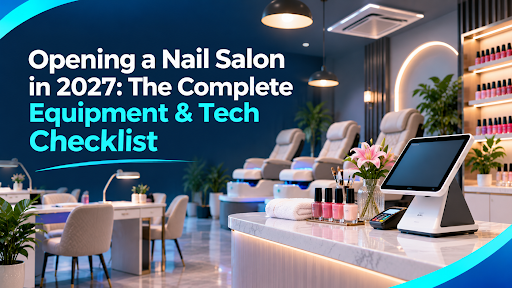
Opening a Nail Salon in 2027: The Complete Equipment & Tech Checklist
Most new salon owners get the fun part right. They pick the polish wall, the pink neon sign, and the chairs that look great on Instagram.
Then opening week arrives. The pedicure drain backs up, the acrylic smell fills the room, and the card reader won't connect to the Wi-Fi.
This checklist exists so that doesn't happen to you. We'll go through every piece of equipment, what it really costs, what the safety rules require, and how to pick a nail salon POS that fits your size. By the end, you'll know exactly what to buy and in what order. This nail salon equipment checklist from Soireeinc walks you through every step.
What Equipment Do You Need to Open a Nail Salon?
Every nail salon needs five groups of equipment: service stations, ventilation and safety gear, sanitation tools, nail tools and supplies, and front desk technology.
Here's how they break down, with typical price ranges from published industry data:
| Equipment Group | What's Included | Typical Cost |
|---|---|---|
| Pedicure stations | Spa chairs, technician stools, footrests | $2,000–$11,000 per chair |
| Manicure stations | Nail tables, client chairs, tech chairs, task lamps | $150–$800 per table |
| Ventilation | Source-capture units, vented tables, exhaust fans | $500–$1,500 per station |
| Sanitation | Autoclave or sterilizer, disinfectant, wet sanitizer jars | $300–$3,000 |
| Nail tools and supplies | E-files, LED lamps, gel, acrylic, implements | $2,000–$21,000 |
| Front desk and tech | POS, booking software, Wi-Fi, phone, cameras | $300–$5,000+ |
The pedicure chair figures come from Booksy's startup cost breakdown. A plain plumbed chair is at the low end, and a zero-gravity massage chair is at the high end.
Everything else on this list is a choice. These five groups aren't. Skip one and you'll either fail a state board inspection or lose clients in your first month.
What Problems Do New Nail Salon Owners Run Into?
We talk to new owners every week. The same few problems come up again and again, and nearly all of them could have been avoided at the buying stage.
Buying Chairs Before Checking the Plumbing
A plumbed pedicure chair needs hot and cold water lines and a drain at each station. If your space isn't already plumbed, the build-out can cost more than the chairs themselves.
Treating Ventilation as an Afterthought
Acrylic monomer and polish fumes build up fast in a small room. Clients notice the smell, and so do your technicians after an eight-hour shift.
Using Retail Software for a Service Business
A basic retail register can ring up a sale. What it can't do is handle walk-in queues, split tips between two techs, or track commissions, which is most of what a salon's front desk does all day.
Forgetting the Small Stuff Until Opening Day
Spare drill bits, extra lamp bulbs, a backup card reader, a second hot towel cabinet. Owners rarely forget the big purchases. They forget the backups, and then they find out on a busy Saturday.
Spending the Whole Budget on Looks
A gorgeous lobby won't keep you open if you have no cash left for payroll in month two. Booksy suggests setting aside $5,000 to $50,000 in working capital to cover three to six months of operating costs.
The Service Station Checklist
Your stations are where you make money, so they're the place to spend first.
Pedicure Chairs: Plumbed or Pipeless?
This is the biggest decision you'll make, so let's lay it out side by side:
| Feature | Plumbed (Piped) Chair | Pipeless Chair |
|---|---|---|
| Upfront cost | Usually lower | Usually higher |
| Plumbing needed | Hot, cold, and drain lines | Water lines and drain still needed, but no internal pipes |
| Cleaning | Internal pipes flushed after every client | Basin and removable jets scrubbed and disinfected |
| Hygiene risk | Bacteria can build up in hidden pipes | Fewer places for bacteria to hide |
| Best for | Owners on a tight budget with strict cleaning habits | Owners who want faster turnover and easier inspections |
Most new salons we see are going pipeless. You pay more upfront, but each turnover is faster and you're less likely to have a problem at inspection.
Before you buy, read the warranty carefully. Look for coverage on the motor and pump, not just the frame, and check whether using a cleaner from another brand voids it.
Manicure Stations
Each station needs a few basics:
- A sturdy nail table with drawer storage
- A comfortable client chair and an adjustable tech stool
- A task lamp with a bright, true-color light
- A hand rest or armrest cushion
- An outlet within reach for the e-file and LED lamp
If you can afford it, buy tables with built-in ventilation. They cost more, but they deal with dust and fumes right where they're created.
Waiting Area and Drying Station
Clients waiting with wet nails need somewhere to sit and a fan or UV dryer within reach. A small drying bar near the front desk also gets clients to checkout faster.
How Do You Keep Your Salon Safe and Inspection-Ready?
This is the part that keeps owners up at night. The good news is that if you set it up right at the start, you'll rarely have to think about it again.
Ventilation Comes First
OSHA's guidance on nail salon chemical hazards is clear that salon ventilation is the best way to lower chemical levels in a salon. It cites NIOSH tests showing exhaust systems can cut worker exposure by at least 50%.
Here's what OSHA recommends:
- Keep exhaust running all day: Don't turn it off between clients.
- Run your HVAC fan on ON, not auto: That keeps air moving even when you're not heating or cooling.
- Replace charcoal filters monthly: That applies to vented tables. Empty their catch basins weekly too.
- Put fans near doors or windows: Air should flow from one end of the salon to the other.
Source-capture ventilation typically runs about $500 to $1,500 per station. For a six-station salon, plan on $3,000 to $9,000.
Safety Data Sheets and PPE
OSHA requires you to keep a Safety Data Sheet (SDS) for every hazardous product, stored near the product, and to train staff on how to use each one safely.
Stock these from day one:
- Nitrile gloves: They resist many salon chemicals.
- Safety goggles: Use them for filing and pouring.
- N95 masks: They help with dust but not vapors. Ventilation handles vapors.
- Metal trash cans with self-closing lids: They keep fumes in and fire risk down.
OSHA also points out that methyl methacrylate (MMA) is banned in many states. Check the label on every acrylic liquid you order.
Sanitation Equipment
Your state board will check this closely. A basic setup includes:
- An autoclave or approved sterilizer: For metal implements like nippers and pushers
- An EPA-registered hospital-grade disinfectant: For tools and surfaces
- Wet sanitizer jars: At every station
- Labeled containers: Separate ones for clean and dirty tools
- Single-use items: Files, buffers, and liners you throw away after each client
Pedicure tubs need their own routine. The EPA's foot spa disinfection guide lays out the cleaning steps between clients and at the end of each day. Print it and put it on the wall in your back room.
Rules change from state to state, so call your state cosmetology board before you order anything. Ask for their inspection checklist. Most boards will send it to you.
The Nail Tools and Supplies Checklist
These are the tools your technicians touch every day. Buy professional grade here, because cheap tools wear out quickly.
Electric Tools
- E-files (electric nail drills) and a full set of drill bits, plus spares
- LED or UV curing lamps, one per manicure station
- A nail dust collector for each station that does acrylic or dip
- A hot towel cabinet for pedicures
- A paraffin warmer, if you'll offer paraffin treatments
- A washer and dryer for towels
Hand Tools
- Cuticle nippers and pushers, at least two sets per tech so one can be sterilized while the other is in use
- Nail clippers and tip cutters
- Dappen dishes and acrylic brushes
- Nail art brushes and dotting tools
- Foot files and callus tools
Opening Inventory
Booksy estimates opening inventory at $2,000 to $21,000. Here's what's typically in it:
- Gel, acrylic, and dip powder systems
- Base coats, top coats, and a starter polish wall
- Tips, forms, and extensions
- Acetone and non-acetone remover
- Cuticle oil, lotions, and scrubs
- Towels, cotton, liners, and disposable files
A smart move is to start with fewer polish shades and reorder what actually sells. Your clients will show you which colors they want within the first month.
The Front Desk and Tech Checklist for 2027
This is where many new owners try to save money. It's also where a lot of profit quietly goes missing.
Your POS System
A POS system nail salon owners can rely on does far more than take cards. It runs your whole front desk.
Here's what to look for:
| Feature | Why It Matters |
|---|---|
| Walk-in queue | Shows who's waiting and which tech is free, so walk-ins don't walk out |
| Online booking and reminders | Clients book any time, and automatic reminders cut no-shows |
| Automatic tip tracking | Credits tips to the right tech, even on split services |
| Commission reports | Gets payroll done in minutes instead of hours |
| Inventory alerts | Warns you before your best-selling gel runs out |
| Client profiles | Saves shade notes, allergies, and service history |
| Chairside payment | Clients pay at the station without smudging wet nails |
Matching the POS to Your Salon Size
You don't need the biggest setup on day one. Here's how Soireeinc typically matches hardware to salon size:
- Small salons (1–4 stations): One handheld terminal that works at the front desk and at each station, with a receipt printer and cash drawer if you need them.
- Growing salons (5–10 stations): A countertop terminal at the front desk plus one or two handhelds for chairside checkout.
- Busy or multi-location salons (10+ stations): A front desk station with a customer-facing display, handhelds on the floor, and one dashboard for every location.
You can see these setups on our Clover POS page.
The Rest of Your Tech Stack
- Business-grade Wi-Fi: A dropped connection at checkout is a lost sale. Ask for a backup cellular option too.
- A business phone line: Many clients, especially older ones, still call to book.
- Security cameras: Point them at the front desk and the entrance.
- A music system: Licensed streaming, not your personal account.
- A tablet for digital forms: Use it for intake and allergy questions.
- A backup card reader: If your main device goes down on a Saturday, you'll want a second one ready.
Tech Trends Worth Planning For
A few things are quickly becoming standard:
- Tap to pay and mobile wallets: Many clients now expect to tap a phone or card instead of inserting it.
- Text-based booking and reminders: More clients book by text or online than by phone.
- Built-in loyalty programs: Points and rewards inside your POS, not a paper punch card.
- Dual pricing options: More salons are posting a cash price and a card price to offset processing fees.
How Much Does It Cost to Equip a Nail Salon?
It depends mostly on your size and whether your space is already plumbed. Here are startup ranges:
| Salon Type | Typical Startup Range |
|---|---|
| Home-based or mobile (1 station) | $2,000–$10,000 |
| Booth or suite rental (solo) | $3,500–$15,000 |
| Small storefront (4–6 stations, already plumbed) | $41,700–$177,500 |
| Mid-size storefront (8–12 stations, empty shell) | $177,500–$515,600 |
The biggest jump comes from build-out. Taking over an already plumbed space is one of the easiest ways to keep your costs down.
The SBA's startup cost worksheet helps you add it all up before you sign a lease. Fill it in with real quotes, not guesses.
Where to Save and Where Not To
| Spend Here | Save Here |
|---|---|
| Pedicure chairs and warranties | Lobby decor |
| Ventilation | Fancy retail displays |
| Sanitation equipment | Huge polish inventory on day one |
| A reliable POS and payment setup | Extra tech you don't need yet |
Is Opening a Nail Salon Still Worth It in 2027?
For owners who plan well, yes. Demand for nail services keeps growing.
The Bureau of Labor Statistics projects jobs for manicurists and pedicurists to grow 9% from 2025 to 2035, much faster than the average for all jobs.
More demand also means more competition, though. The salons that last tend to be the ones that move clients through quickly, keep technicians happy, and know exactly what they're earning.
That's why equipment and tech choices matter so much. They decide how fast you can serve clients, how safe your salon feels, and how much of your revenue you actually keep.
Opening Soon? Let's Get Your Front Desk Ready Before Day One
You've picked your chairs and ordered your polish. The last piece is the system that ties it all together.
Soireeinc sets up a nail salon POS system owners can use from their very first client. We load your services, prices, technicians, and tip rules before you open, so your front desk is ready when the doors are.
Here's what you get:
- Hardware matched to your size: From a single handheld to a full multi-location setup
- Setup done for you: Your menu and staff are ready from day one
- Clear monthly pricing: Hardware, software, and processing in one quote, with no hidden fees
- Real support: A US-based team you can call when you need help
Tell us your station count and opening date, and we'll put together a setup and quote built for your salon. Have a look at our nail salon POS features, then reach out.
Get your free salon setup quote and open with a front desk that's already working.
Get Started With Us
Fill in your details and we'll get back to you shortly.