





Where a generic POS lets jewelers down
Unique pieces treated like soup cans
A retail POS expects 40 identical units. You have one ring with one set of details, and you need to know exactly where it is.
Repairs on paper envelopes
A customer's heirloom in the back, a promised date on a slip, and no way to see which repairs are running late.
Layaway in a notebook
Months of partial payments tracked by hand, with the piece pulled from the case and the balance easy to get wrong.
A big sale, then a frozen deposit
A $9,000 sale on an account approved for small tickets can trigger a processor review, and your money waits.
SKU R-2041
Solitaire engagement ring
Metal
14K white gold
Weight
3.4 g
Center stone
1.02 ct round diamond
Grading report
On file
On layaway
$1,400 of $3,400
- Jun 02, deposit$700
- Jul 01, payment$350
- Aug 01, payment$350
- Balance due$2,000
What your jewelry store POS should do
Item-level inventory
Each piece with its own SKU and details: metal, karat, weight, stones, and grading report number.
Repair tickets
Customer, item, work requested, price, deposit, and promised date, tracked from take-in to pickup.
Custom orders with deposits
Record the design, quote, and deposit, then collect the balance when the piece is ready.
Layaway
Hold the piece, record every payment, and always know the balance due.
Detailed receipts
Full item descriptions customers can give to their insurer, plus gift receipts without prices.
Customer history
Ring sizes, anniversaries, past purchases, and wish lists saved to the customer profile.
Split payments
Card, cash, and trade-in credit combined on one sale.
Case-side checkout
A handheld lets staff close the sale at the case instead of walking the customer to the register.
Taking big-ticket payments without surprises
The payment side matters more for jewelers than almost any other retailer. These are the things that protect a $5,000 sale.
An account sized for your pieces
Processors approve an expected average and maximum sale when your account opens. Sales far above those numbers can trigger a review or a deposit hold. We set your account up with your real price range from the start.
Chip and tap, not typed-in numbers
Card-present chip and contactless payments are far better protected against fraud disputes than card numbers typed in by hand. Keep keyed entry for rare exceptions.
Check ID on large sales
For high-value purchases, compare the name on the card with a photo ID and note it on the sale. It is a simple step that helps if a dispute arrives later.
Keep the paper trail
Signed receipts, item details, and any written return policy stored with the sale make chargebacks far easier to answer.
Large cash sales
A US business that receives more than $10,000 in cash in one transaction, or related transactions, generally must file IRS Form 8300. Record cash payments with customer details, and ask your accountant how the rule applies to you.
How a repair moves through your POS
Every repair gets a ticket and a status, so you can see at a glance what is running late and what is ready for pickup.
Take in
Customer, item description, condition notes, and photos if your setup supports it.
Quote and deposit
Price the work, take a deposit, and set a promised date.
In progress
In-house or sent to your bench jeweler, with the status updated.
Ready
Mark it ready and let the customer know it is waiting.
Picked up
Collect the balance and close the ticket.
Buying gold from the public?
Many states and cities regulate businesses that buy jewelry and precious metals from customers. Common rules include:
- Recording the seller's photo ID and a description of each item
- Holding purchased items for a set period before resale or melting
- Reporting purchases to local law enforcement
Your POS can record buy transactions separately from sales, but rules vary widely. Check with your city and state before you start buying.
Recommended setups

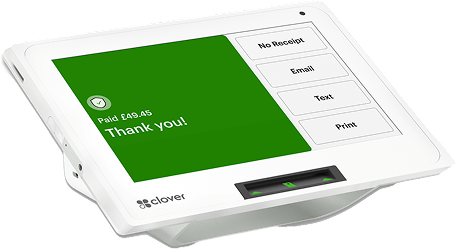
Boutique jeweler
One counter, curated collection
- Countertop station with customer-facing display
- Receipt printer for detailed receipts
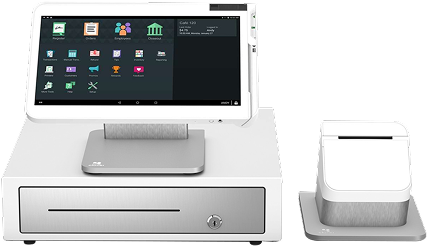
Full-service jeweler
Sales, repairs, and custom work
- Countertop station at the repair counter
- Handheld for case-side checkout
- Tag or label printer for inventory
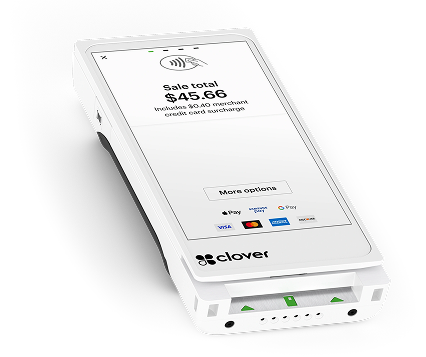
Showroom or multi-store
Several cases or locations
- Stations and handhelds across the floor
- Inventory visible across locations
- Reports by store and salesperson
On a $5,000 ring, 3% is $150
Big tickets mean big processing fees. Your pricing structure matters more than for almost any other store. We will review your current statement and show you, line by line, what you are paying and where it can come down.
Questions to ask before you pick a jewelry store POS
Ask any provider these, including us.
Also sell clothing or accessories? See our clothing store POS.
- Can each piece carry its own metal, weight, and stone details?
- Is there a repair ticket system with statuses and promised dates?
- Can I run layaway and custom orders with deposits?
- Will my merchant account be approved for my largest sales?
- Can receipts show full item descriptions for insurance?
- Can I combine card, cash, and trade-in credit on one sale?
- What is the full monthly cost, and how is processing priced on large tickets?
- Who do I call if a big deposit is delayed?
From quote to first sale
Tell us about your store
What you sell, whether you do repairs, and your typical and largest sale.
Account approval
We set up your merchant account for your real price range.
Inventory and setup
Items, details, repair and layaway settings configured before shipping.
Open the cases
Most stores are live within a few days of approval.
Jewelry store POS
questions, answered
A jewelry store POS should track each piece individually with its metal, weight and stone details, manage repair tickets and custom orders with deposits, handle layaway, print detailed receipts customers can use for insurance, and run on a merchant account approved for your largest sales.
When you open a merchant account, the processor approves an expected average and maximum sale size. A sale far above those numbers can trigger a review or a temporary hold on your deposit. Telling us your real price range up front means your account is set up for your biggest pieces.
Yes. Each repair gets a ticket with the customer, item description, work requested, price, promised date and deposit, and moves through statuses from received to ready to picked up, so nothing gets lost in the back.
Yes. The POS records the item on hold, the total, each payment and the balance due, and prints a receipt for every payment. Put your layaway terms in writing, and check your state's layaway rules.
In the US, a business that receives more than $10,000 in cash in one transaction, or in related transactions, generally must file IRS Form 8300. The POS helps by recording cash payments with customer details. Ask your accountant how the rule applies to you.
Yes. Receipts can include the full item description, such as metal, karat, weight, stone type and size, and any grading report number, which customers can give to their insurer. A receipt is not an appraisal.
Most jewelry stores are live within a few days. Importing a large inventory with item details may take longer, and account approval for high-ticket sales can add review time.
A POS and merchant account built for fine jewelry
Tell us about your store and your price range, and we will recommend a setup with the full monthly cost upfront.
Get a jewelry store quote